



Growing into adulthood is one of life’s greatest journeys, but it is rarely a path anyone should walk alone. Every young person reaches moments when they need guidance, encouragement, and someone who genuinely believes in their potential. For some, that support comes from parents or family members. For many others – particularly young adults aging out of foster care or those facing difficult life circumstances – that trusted voice is missing.
This is where mentorship becomes life-changing.
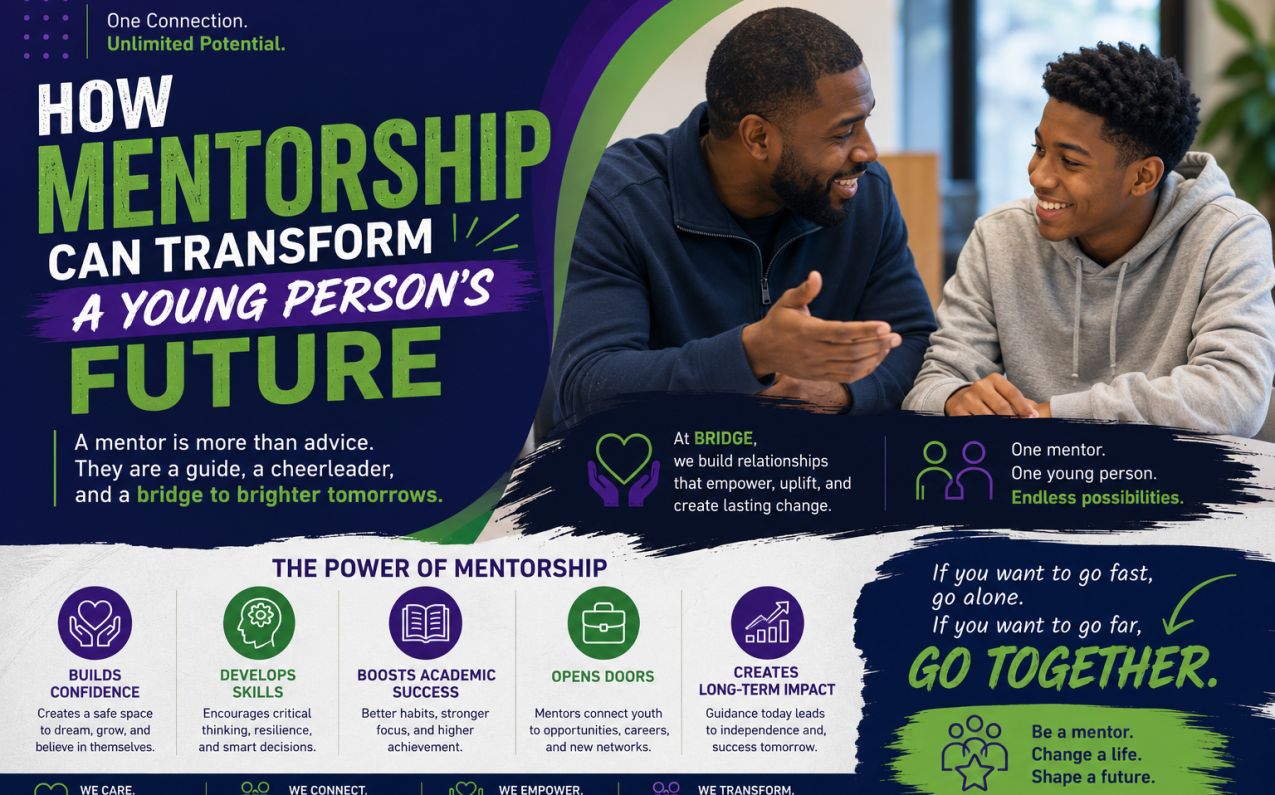
A mentor is far more than someone who gives advice. A mentor is a trusted guide, a steady source of encouragement, and often the person who helps a young individual see possibilities they never imagined for themselves. Through consistent relationships, practical guidance, and genuine care, mentorship has the power to reshape lives, strengthen communities, and create brighter futures.
At BRIDGE, we believe meaningful relationships are one of the greatest investments a community can make. Our mission is built around connecting generations, supporting vulnerable young adults, reducing social isolation among seniors, providing therapeutic and healthcare support, and creating opportunities that empower individuals to thrive. Mentorship sits at the heart of that mission because lasting transformation always begins with trusted human connection.
If communities want to reduce youth homelessness, improve mental health outcomes, increase educational achievement, and help young adults build stable, independent lives, mentorship must become a priority.
Why Mentorship Matters More Than Ever
Today’s young people are growing up in an increasingly complex world. They face challenges that previous generations could hardly imagine, including financial uncertainty, rising housing costs, mental health struggles, social media pressures, changing career landscapes, and reduced access to long-term support systems.
While every generation experiences obstacles, many vulnerable young adults face an additional burden—they lack someone to guide them through life’s biggest decisions.
A mentor helps bridge that gap.
Rather than replacing parents or caregivers, mentors provide an additional layer of encouragement and wisdom. They become reliable adults who offer perspective during difficult moments and celebrate progress along the way.
Research consistently shows that young people with caring adult mentors are more likely to remain engaged in school, develop healthy relationships, avoid risky behaviors, pursue higher education, and secure stable employment. More importantly, they often gain something that cannot be measured – a belief that they matter.
What Is Mentorship?
Mentorship is an intentional relationship where an experienced, caring individual supports another person’s personal, educational, emotional, or professional development.
Unlike coaching, which often focuses on achieving specific goals, mentorship takes a broader approach.
A mentor may help a young person:
- Build confidence
- Develop practical life skills
- Explore career options
- Navigate educational choices
- Strengthen emotional resilience
- Improve communication skills
- Set achievable goals
- Learn financial responsibility
- Build healthy relationships
- Discover their strengths
Most importantly, mentors remind young people that they are not alone.
The Power of Having Someone Who Believes in You
Every successful person can usually point to someone who encouraged them during a critical season of life.
Sometimes it was a parent.
Sometimes a teacher.
Sometimes a coach.
Sometimes a neighbor.
Sometimes a mentor.
Belief has extraordinary power.
When a young person hears someone consistently say:
“You can do this.”
“I believe in you.”
“Let’s figure this out together.”
those words gradually replace self-doubt with confidence.
For many vulnerable young adults, this may be the first time anyone has expressed unwavering confidence in their future.
That encouragement often becomes the foundation upon which success is built.
Creating a Safe Space for Honest Conversations
Many young adults carry burdens they rarely discuss.
Some struggle with anxiety.
Others battle depression.
Some have experienced trauma, neglect, abuse, or instability.
Many simply feel overwhelmed by the responsibilities of adulthood.
A trusted mentor creates a safe environment where these concerns can be discussed openly without fear of criticism or rejection.
Instead of immediately solving every problem, good mentors listen carefully.
They ask thoughtful questions.
They encourage reflection.
They help young people discover their own solutions.
This process builds confidence because the young person learns they are capable of overcoming challenges rather than becoming dependent on others.
Mentorship Builds Confidence That Lasts
Confidence isn’t created through compliments alone.
It grows through experience.
Mentors help young people recognize achievements they might otherwise overlook.
Whether it’s completing a job application, passing an exam, attending a difficult interview, or simply managing responsibilities effectively, celebrating progress reinforces positive behaviors.
Over time, young adults begin believing:
“I can solve problems.”
“I can learn new skills.”
“I can recover from setbacks.”
“I have value.”
These internal beliefs influence every future decision they make.
Teaching Critical Life Skills
One reason mentorship is so valuable is because it fills practical knowledge gaps.
Many young adults – especially those without consistent family support – never receive instruction in everyday life skills.
Mentors often provide guidance on topics such as:
Financial Literacy
Managing money is one of adulthood’s greatest challenges.
Mentors can teach:
- Budgeting
- Saving consistently
- Responsible borrowing
- Credit management
- Understanding taxes
- Planning for emergencies
Financial literacy reduces stress while increasing long-term stability.
Career Development
Choosing a career can feel overwhelming.
Mentors provide valuable insight by helping young adults:
- Identify strengths
- Explore industries
- Prepare resumes
- Practice interviews
- Build professional networks
- Develop workplace confidence
Sometimes one conversation opens doors to opportunities previously unknown.
Time Management
Learning how to prioritize responsibilities becomes increasingly important during adulthood.
Mentors help young people establish routines, manage deadlines, balance work and education, and avoid burnout.
These habits contribute significantly to future success.
Helping Young People Build Emotional Resilience
Failure is unavoidable.
The difference between thriving and giving up often depends on how someone responds to setbacks.
Mentorship teaches resilience by helping young people understand that failure is part of growth—not proof of inadequacy.
Instead of asking,
“Why did this happen to me?”
Mentors encourage questions like:
“What can I learn?”
“How can I improve?”
“What’s my next step?”
This shift in thinking transforms obstacles into opportunities for growth.
Reducing Risky Behaviors Through Positive Relationships
Young people without stable support systems often face greater risks of engaging in unhealthy behaviors.
Positive mentoring relationships reduce these risks by providing:
- Accountability
- Encouragement
- Healthy role models
- Emotional support
- Constructive problem-solving
- Positive recreational activities
Knowing that someone genuinely cares about their choices encourages young people to make wiser decisions.
Academic Success Begins with Encouragement
Education extends beyond classrooms.
Young people perform better academically when they believe their future matters.
Mentors encourage:
- Regular school attendance
- Goal setting
- Study habits
- College preparation
- Scholarship applications
- Vocational training
- Lifelong learning
Many students simply need someone who believes they are capable of achieving more than they imagined.
Expanding Career Opportunities Through Mentorship
One overlooked benefit of mentorship is access to professional networks.
Experienced mentors often introduce young adults to:
- Employers
- Community leaders
- Internship opportunities
- Volunteer experiences
- Professional organizations
- Career development resources
These introductions can significantly influence future employment opportunities.
Sometimes success depends not only on what someone knows – but who is willing to open a door.
Why Mentorship Is Especially Important for Youth Aging Out of Foster Care
Young adults transitioning from foster care often enter adulthood without permanent family relationships or long-term guidance.
Many face challenges including:
- Housing instability
- Financial hardship
- Limited professional networks
- Emotional trauma
- Mental health concerns
- Educational disruptions
Mentorship provides stability during a season marked by uncertainty.
Consistent encouragement helps young adults develop confidence while navigating employment, education, healthcare, housing, and independent living.
At BRIDGE, we recognize that successful transitions require more than temporary assistance. They require meaningful relationships that continue long after formal programs conclude.
The Role of Intergenerational Mentorship
One of the most powerful forms of mentorship occurs across generations.
Older adults possess decades of wisdom, experience, resilience, and practical knowledge.
Young adults bring creativity, energy, fresh perspectives, and technological skills.
When these generations connect, both benefit.
Seniors often rediscover purpose through meaningful relationships, while young adults gain trusted guidance that strengthens emotional well-being and personal growth.
This intergenerational approach reflects BRIDGE’s commitment to connecting seniors and young adults in ways that reduce isolation while creating lasting community relationships.
The Connection Between Mentorship and Mental Health
Mental health is influenced by relationships.
Feeling supported significantly reduces feelings of isolation, hopelessness, and anxiety.
Mentors cannot replace licensed therapists or healthcare professionals, but they often become important sources of emotional encouragement.
At BRIDGE, we understand that emotional wellness requires a holistic approach that combines therapeutic services, healthcare support, mentoring, community engagement, and meaningful human connection.
Healthy relationships complement professional care by creating environments where healing becomes possible.
What Makes an Effective Mentor?
Not every mentor has extraordinary qualifications.
The best mentors possess qualities such as:
Patience
Growth takes time.
Mentors understand that lasting change rarely happens overnight.
Consistency
Showing up consistently builds trust.
Reliability matters more than perfection.
Active Listening
Young people often need someone who listens more than someone who lectures.
Empathy
Understanding another person’s experiences creates stronger relationships.
Encouragement
Mentors celebrate progress while inspiring continued growth.
Integrity
Young people learn as much from a mentor’s character as from their advice.
How Communities Can Encourage Mentorship
Creating stronger mentoring cultures requires collective action.
Communities can support mentorship by:
- Establishing structured mentoring programs
- Partnering nonprofits with schools
- Encouraging volunteerism
- Providing mentor training
- Supporting youth development initiatives
- Creating safe community gathering spaces
- Investing in leadership development
When communities intentionally invest in young people, the benefits extend across generations.
How BRIDGE Is Creating Lasting Change Through Relationships
At BRIDGE, mentorship is more than a program—it is a philosophy.
We believe lasting transformation occurs through authentic relationships built on trust, compassion, and consistency.
Our work combines mentorship with:
- Therapeutic support
- Community engagement
- Advocacy
- Healthcare and wellness initiatives
- Emotional support
- Life skills development
- Intergenerational connection
- Resources for vulnerable young adults
- Programs that reduce social isolation among seniors
Rather than focusing only on immediate needs, we strive to build sustainable pathways toward independence, resilience, and hope.
Every mentoring relationship represents another opportunity to transform a life.
Practical Ways You Can Become a Mentor
You don’t need decades of experience to positively influence a young person’s future.
You can begin by:
- Volunteering with a local nonprofit
- Supporting mentoring initiatives
- Sharing professional knowledge
- Offering career guidance
- Helping with résumé reviews
- Teaching financial literacy
- Encouraging educational achievement
- Simply being present and listening
Small investments of time often produce lifelong results.
Conclusion
Mentorship has the power to change the direction of a young person’s life.
A single caring relationship can replace uncertainty with confidence, isolation with belonging, and fear with hope. While financial assistance, housing support, education, and healthcare remain essential, meaningful human connection is often the catalyst that allows those resources to have their greatest impact.
At BRIDGE, we believe every young adult deserves someone who sees their potential, believes in their future, and walks beside them through life’s challenges. Through mentorship, therapeutic services, advocacy, intergenerational engagement, and compassionate community support, we are helping create futures filled with opportunity rather than limitation.
When one caring adult chooses to invest in one young person, the effects extend far beyond that relationship. Families become stronger. Communities become healthier. Future generations benefit.
Mentorship is not simply about giving advice – it is about giving hope.
And hope has the power to transform lives.