

Growing up is rarely easy. Every young adult faces moments of uncertainty as they transition from adolescence into adulthood. There are career decisions to make, bills to pay, relationships to navigate, and responsibilities that arrive almost overnight. While many young people rely on parents, relatives, teachers, mentors, or trusted friends during this stage of life, countless others must face these challenges alone.
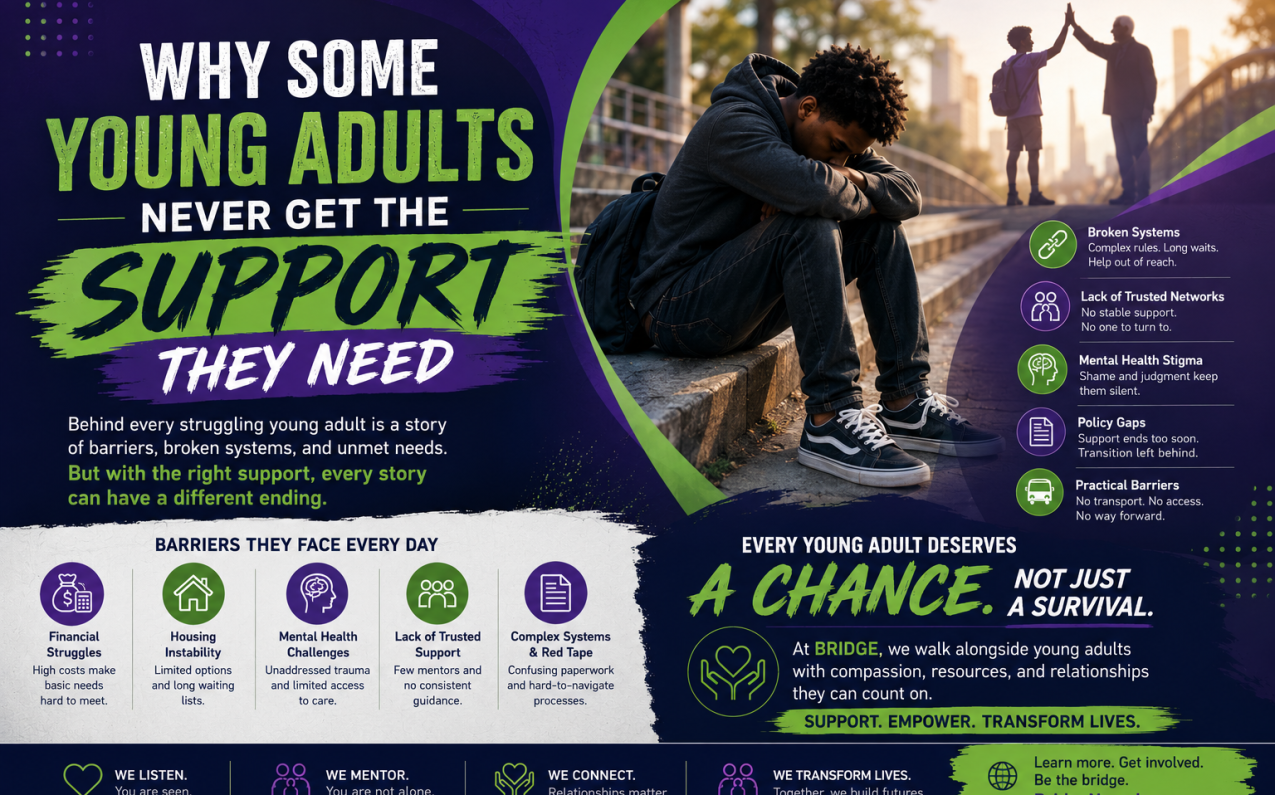
For many vulnerable young adults – especially those aging out of foster care, experiencing homelessness, living in poverty, or struggling with mental health challenges – the journey into adulthood is far more difficult than most people realize. The issue is not simply that help doesn’t exist. In many communities, resources are available. The real problem is that many young adults never successfully access the support they desperately need.
At BRIDGE, we believe every young person deserves the opportunity to thrive, regardless of their background or circumstances. Our mission is rooted in building meaningful relationships, providing therapeutic services, supporting emotional well-being, fostering intergenerational connections, and creating pathways toward independence for vulnerable young adults while also addressing the needs of socially isolated seniors. Because when communities come together, lives change.
Understanding why some young adults fall through the cracks is the first step toward creating stronger communities where no one is left behind.
The Hidden Reality Behind Youth Struggles
Many people assume that once someone reaches the age of 18, they are automatically prepared for adulthood. In reality, turning 18 changes very little emotionally, financially, or psychologically.
Most young adults still depend on guidance from experienced adults. They continue asking questions about employment, finances, healthcare, education, relationships, and personal development.
Imagine having to answer all those questions without anyone to call.
That is the reality for thousands of young adults every year.
For youth leaving foster care, this challenge can be even more severe. They often transition into adulthood without permanent family relationships, financial safety nets, or trusted mentors. While many of their peers still receive help from parents well into their twenties, these young adults are expected to navigate adulthood almost entirely on their own.
Without consistent support, even small setbacks can become life-changing crises.
Why Support Matters More During Emerging Adulthood
The years between ages 18 and 25 are increasingly recognized by psychologists as one of the most important developmental stages of life.
This period involves major life transitions, including:
- Pursuing higher education
- Entering the workforce
- Managing personal finances
- Finding stable housing
- Developing healthy relationships
- Learning emotional resilience
- Building personal identity
- Making long-term life decisions
Each of these milestones becomes significantly more difficult without encouragement, guidance, and practical support.
Support is not about creating dependency.
It is about equipping young people with the confidence, skills, and resources needed to become independent adults.
Systemic Barriers That Keep Young Adults from Getting Help
One of the biggest misconceptions is that vulnerable young adults simply fail to seek assistance. In reality, many actively try to access services but encounter systems that are confusing, underfunded, or difficult to navigate.
Healthcare Is Often Financially Out of Reach
Mental health counseling, therapy, medical care, and wellness services are essential for many young adults who have experienced trauma.
Unfortunately, these services are frequently expensive.
Young adults without adequate insurance may postpone seeking care until their conditions worsen.
Others simply give up after discovering they cannot afford treatment.
Organizations like BRIDGE recognize that emotional healing must accompany practical support. Therapeutic services, counseling, peer support, and trauma-informed care can make an enormous difference in helping young adults build healthier futures.
Affordable Housing Remains Limited
Housing insecurity is one of the greatest challenges facing vulnerable young adults.
Finding affordable housing has become increasingly difficult in many communities.
Young adults aging out of foster care often encounter:
- Long waiting lists
- High rental costs
- Security deposits they cannot afford
- Strict eligibility requirements
- Limited emergency housing
Without stable housing, maintaining employment, attending school, or prioritizing mental health becomes extremely challenging.
Housing stability creates the foundation upon which every other aspect of life can grow.
Transportation Creates Invisible Barriers
Transportation may seem like a minor issue, but it often determines whether someone can access life-changing opportunities.
Without reliable transportation, young adults may struggle to:
- Attend job interviews
- Visit healthcare providers
- Participate in therapy sessions
- Meet mentors
- Attend educational programs
- Reach community support organizations
Something as simple as missing public transportation can become the difference between receiving help and remaining isolated.
The Absence of Trusted Adults
Perhaps the greatest challenge facing many vulnerable young adults is not financial.
It is relational.
Most successful adults can identify someone who believed in them during difficult seasons.
It may have been:
- A parent
- A grandparent
- A teacher
- A coach
- A mentor
- A neighbor
- A pastor
- A family friend
Many vulnerable young adults have never experienced that consistent encouragement.
Without trusted relationships, they often face life’s biggest decisions completely alone.
At BRIDGE, we believe mentorship is one of the most valuable investments a community can make. One caring adult cannot solve every problem – but one caring adult can completely change someone’s future.
Why Shame Prevents Many Young Adults from Asking for Help
One of the least discussed barriers is shame.
Many young adults believe asking for help signals weakness.
Others fear being judged because of:
- Family circumstances
- Foster care history
- Financial struggles
- Mental health challenges
- Educational setbacks
- Housing instability
As a result, they remain silent.
Unfortunately, silence often deepens isolation.
Creating communities where vulnerability is welcomed rather than criticized allows young people to seek assistance before crises escalate.
Cultural Expectations Can Become Additional Obstacles
In many cultures, independence is celebrated.
While resilience is valuable, some cultural beliefs unintentionally discourage healthy help-seeking behaviors.
Young adults frequently hear messages such as:
- “Figure it out yourself.”
- “Everyone struggles.”
- “Stop complaining.”
- “You’re an adult now.”
- “Work harder.”
Although these statements may be well-intentioned, they often ignore the realities of trauma, poverty, family instability, or foster care experiences.
True independence grows through guidance – not abandonment.
Policy Gaps Leave Many Young Adults Behind
Support systems frequently end abruptly based on age rather than actual readiness.
Programs may stop when someone turns 18 or 21, even though their challenges continue.
For young adults aging out of foster care, this can create what many describe as a “support cliff.”
One day services exist.
The next day they disappear.
Life does not suddenly become easier because someone reaches a certain birthday.
Policies should recognize that successful transitions require gradual support, continued mentorship, and coordinated services beyond legal adulthood.
Fragmented Services Create Frustration
Many organizations genuinely want to help.
The problem is that services often operate independently.
Young adults may need assistance from:
- Housing agencies
- Employment programs
- Mental health providers
- Healthcare professionals
- Educational institutions
- Social workers
- Community nonprofits
When these organizations fail to communicate, young adults are forced to repeat their stories repeatedly while navigating complicated systems.
Integrated, person-centered support creates far better outcomes.
Trauma Often Goes Unrecognized
Many vulnerable young adults carry invisible wounds.
Experiences such as:
- Abuse
- Neglect
- Family separation
- Foster care placement
- Domestic violence
- Community violence
- Homelessness
can have lasting emotional effects.
Trauma influences decision-making, relationships, confidence, and stress responses.
Without trauma-informed care, traditional support services may unintentionally overlook the deeper issues affecting long-term success.
Healing requires understanding – not judgment.
Why Community Support Changes Everything
Government programs alone cannot solve every challenge.
Communities also play an essential role.
Everyday people can make extraordinary differences by:
- Becoming mentors
- Volunteering
- Supporting nonprofit organizations
- Offering internships
- Providing career guidance
- Teaching life skills
- Donating resources
- Creating welcoming environments
Communities become stronger when every member contributes.
How BRIDGE Is Working to Fill the Gaps
At BRIDGE, we believe support should extend beyond meeting immediate needs. Lasting transformation happens when practical assistance is combined with meaningful relationships, emotional healing, and opportunities for personal growth.
Our mission focuses on creating a community where vulnerable young adults and socially isolated seniors are seen, valued, and supported.
Through our programs and partnerships, we strive to provide:
Therapeutic and Emotional Support
Healing from trauma requires compassionate care. We advocate for counseling, emotional wellness initiatives, and therapeutic services that help individuals build resilience and confidence.
Mentorship and Life Skills
Young adults benefit immensely from trusted mentors who can provide guidance in career planning, financial literacy, education, and everyday decision-making.
Community Connection
Strong relationships reduce loneliness, increase confidence, and create lasting support networks that continue beyond formal programs.
Advocacy
We work to raise awareness about the challenges facing vulnerable populations while encouraging policies that promote equity, opportunity, and long-term support.
Intergenerational Engagement
By connecting seniors with young adults, BRIDGE fosters relationships that benefit both generations. Seniors share wisdom, encouragement, and life experience, while young adults bring energy, companionship, and fresh perspectives.
Together, these relationships help reduce isolation and strengthen communities.
Practical Ways You Can Help
You don’t have to work in social services to change someone’s future.
You can make a difference by:
- Becoming a mentor.
- Volunteering your time.
- Supporting nonprofit organizations financially.
- Donating professional skills.
- Offering internships or employment opportunities.
- Advocating for improved youth policies.
- Sharing educational resources.
- Encouraging young adults in your community.
- Supporting trauma-informed care initiatives.
- Raising awareness through conversations and social media.
Small acts of kindness often become turning points in someone’s life.
Building Communities Where Every Young Adult Belongs
No young adult should feel invisible.
No one should have to navigate adulthood without encouragement, guidance, or hope.
When we invest in young people, we invest in healthier families, stronger neighborhoods, and more resilient communities.
Support should never be viewed as charity. It is an investment in human potential.
Communities flourish when vulnerable individuals are given opportunities to succeed rather than being left to struggle alone.
Conclusion
The question isn’t whether support changes lives.
The evidence consistently shows that it does.
The real question is whether we are willing to build communities where every young adult has access to that support.
At BRIDGE, we believe lasting change begins with connection. By providing therapeutic services, fostering mentorship, advocating for vulnerable populations, and strengthening relationships between generations, we are helping create a future where young adults are empowered – not overlooked – and where seniors continue to experience purpose, dignity, and belonging.
Together, we can ensure that fewer young adults fall through the cracks and more have the opportunity to build lives filled with hope, stability, and purpose.
Every caring conversation, every mentoring relationship, every volunteer hour, and every act of generosity brings us one step closer to that vision.
If we want stronger communities tomorrow, we must start by supporting vulnerable young adults today.