

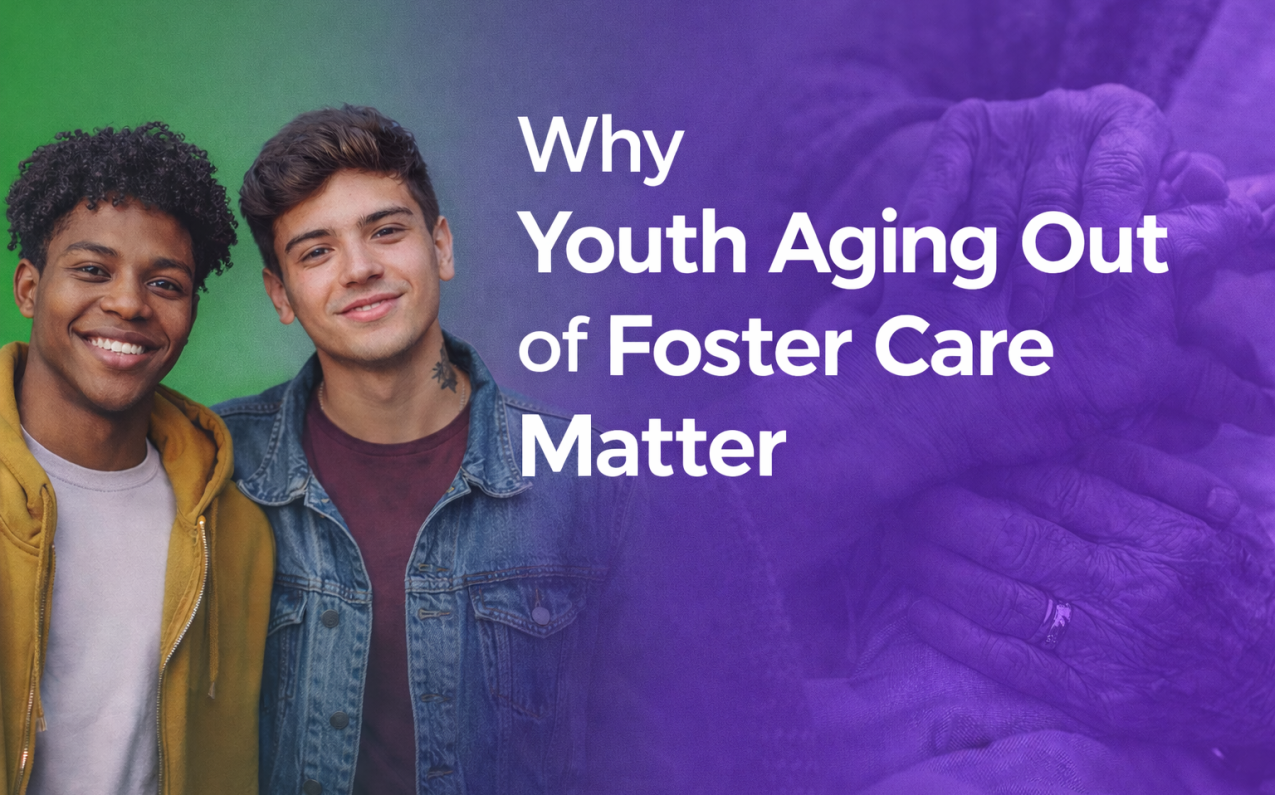
For most young people, turning 18 is a milestone filled with excitement – college plans, first jobs, guidance from parents, and the comfort of knowing someone is always in their corner. But for thousands of youth aging out of foster care each year, adulthood doesn’t arrive with celebration. It arrives with uncertainty, fear, and the sudden disappearance of support.
Youth aging out of foster care matter because they are not statistics, case numbers, or system outcomes. They are young adults with dreams, potential, and resilience – often forced to navigate life’s most complex challenges alone, at the very moment when support matters most.
At BRIDGE Nevada, we believe that no young person should transition into adulthood without connection, guidance, and a sense of belonging. When we invest in youth aging out of foster care, we don’t just change individual lives – we strengthen families, communities, and future generations.
The Challenge of Life After Foster Care
Each year, young people across the United States leave the foster care system when they reach adulthood. For many, this transition happens abruptly. One day, there is structure, supervision, housing, and case management. The next, they are expected to secure employment, pay rent, manage finances, and navigate adulthood – often without a safety net.
Unlike their peers, youth aging out of foster care rarely have parents to call for advice, family homes to return to, or financial cushions to fall back on. Many carry unresolved trauma from childhood abuse, neglect, or repeated placement disruptions. Without consistent adult guidance, even simple tasks – like filling out job applications, budgeting money, or signing a lease – can feel overwhelming.
What should be an exciting step forward instead feels like standing at the bottom of a steep, unfamiliar mountain, with no map and no one to walk alongside them.
This is where intentional support, mentorship, and intergenerational connection become life-changing.
The Reality for Youth Aging Out of Foster Care
The challenges facing youth aging out of foster care are not abstract – they are measurable, persistent, and deeply human.
Research consistently shows that former foster youth face disproportionately high risks of homelessness, unemployment, mental health challenges, and involvement with the justice system. Many struggle to complete their education, not because they lack ability, but because survival often takes priority over long-term goals.
Common realities include:
- Housing instability within the first few years after aging out
- Difficulty maintaining employment due to lack of guidance and soft skills
- Unaddressed trauma, anxiety, and depression
- Limited access to trusted adults for emotional support
- Social isolation and a deep sense of abandonment
These outcomes are not the result of failure or lack of effort. They are the predictable result of a system that often ends support too early.
When youth lose access to stable housing, education assistance, and mentorship at age 18 or 21, they are left vulnerable at the very moment their peers are still being supported at home. Without intervention, many find themselves cycling through poverty, homelessness, or crisis – not because they can’t succeed, but because no one stayed long enough to help them try.
The Cost of Doing Nothing
Failing to support youth aging out of foster care comes at a high cost – emotionally, socially, and economically.
Communities bear the long-term impact through increased rates of homelessness, incarceration, unemployment, and reliance on emergency services. Taxpayers absorb the financial burden, but the deeper cost is human: lost potential, broken confidence, and young lives defined by survival instead of possibility.
When a young person falls through the cracks, it doesn’t just affect them. It affects future families, workplaces, and neighborhoods. Trauma left unaddressed often repeats itself across generations.
But the opposite is also true.
When youth receive consistent mentorship, life-skills training, and emotional support, the outcomes shift dramatically. They complete school. They maintain jobs. They build healthy relationships. They give back.
The difference is not ability – it’s connection.
Why Connection Changes Everything
At Bridge Nevada, we believe connection is the missing link.
Youth aging out of foster care don’t just need services – they need relationships. They need adults who show up, listen without judgment, and model what stability looks like. They need people who don’t disappear when things get difficult.
That’s why our work intentionally connects youth aging out of foster care with seniors – individuals who bring life experience, wisdom, patience, and a deep desire to give back. These intergenerational relationships create something powerful: mutual healing.
- Youth gain guidance, encouragement, and a trusted voice in their lives
- Seniors rediscover purpose, connection, and the joy of making a difference
- Communities benefit from stronger social bonds and shared responsibility
This is not charity – it’s partnership. And it works.
Breaking the Cycle Through Mentorship and Support
Programs that focus on mentorship, life skills, and emotional support consistently show better outcomes for youth transitioning out of foster care. Practical guidance matters – but so does consistency.
Youth thrive when they know:
- Someone believes in them
- Someone will answer the phone
- Someone won’t give up after a setback
Through structured mentorship, workshops, and community engagement, youth learn how to:
- Budget money and manage finances
- Prepare for employment and interviews
- Communicate effectively and advocate for themselves
- Build healthy routines and relationships
- Envision a future beyond survival
These are skills many young people learn informally at home. For foster youth, they must be taught intentionally – and reinforced through relationships.
Real Lives, Real Change
Behind every statistic is a young person doing their best to move forward despite overwhelming odds.
We have seen what happens when youth are met with compassion instead of judgment, guidance instead of abandonment, and consistency instead of chaos. When young people feel seen and supported, they begin to see themselves differently.
Confidence grows. Hope returns. Goals become possible.
And just as importantly, youth begin to believe they matter.
Why Youth Aging Out of Foster Care Matter to All of Us
Supporting youth aging out of foster care is not just a moral responsibility – it’s a community investment.
When young people succeed:
- Communities become safer and stronger
- Cycles of poverty are interrupted
- Future generations benefit from stability
- Seniors find renewed purpose and belonging
This work is about more than helping individuals survive. It’s about helping them belong.
At BRIDGE Nevada, our mission is rooted in Building Relationships, Inspiring Dialogue, and empowering Generations. We believe that when generations come together, everyone rises.
How You Can Make a Difference
You don’t need to be an expert to help – you just need to care.
Here are simple but powerful ways to support youth aging out of foster care:
- Become a mentor or volunteer
- Support organizations creating intergenerational connections
- Advocate for policies that extend foster youth support
- Donate resources, time, or expertise
- Share stories that raise awareness
Every action matters. Every relationship counts.
A Future Built on Connection
Youth aging out of foster care matter because their lives, dreams, and futures matter. With the right support, they don’t just overcome challenges – they become leaders, caregivers, mentors, and contributors to society.
At BRIDGE Nevada, we are committed to ensuring that no young person walks into adulthood alone, and no senior is left without purpose.
Together, we are building bridges that change lives – one relationship at a time.