



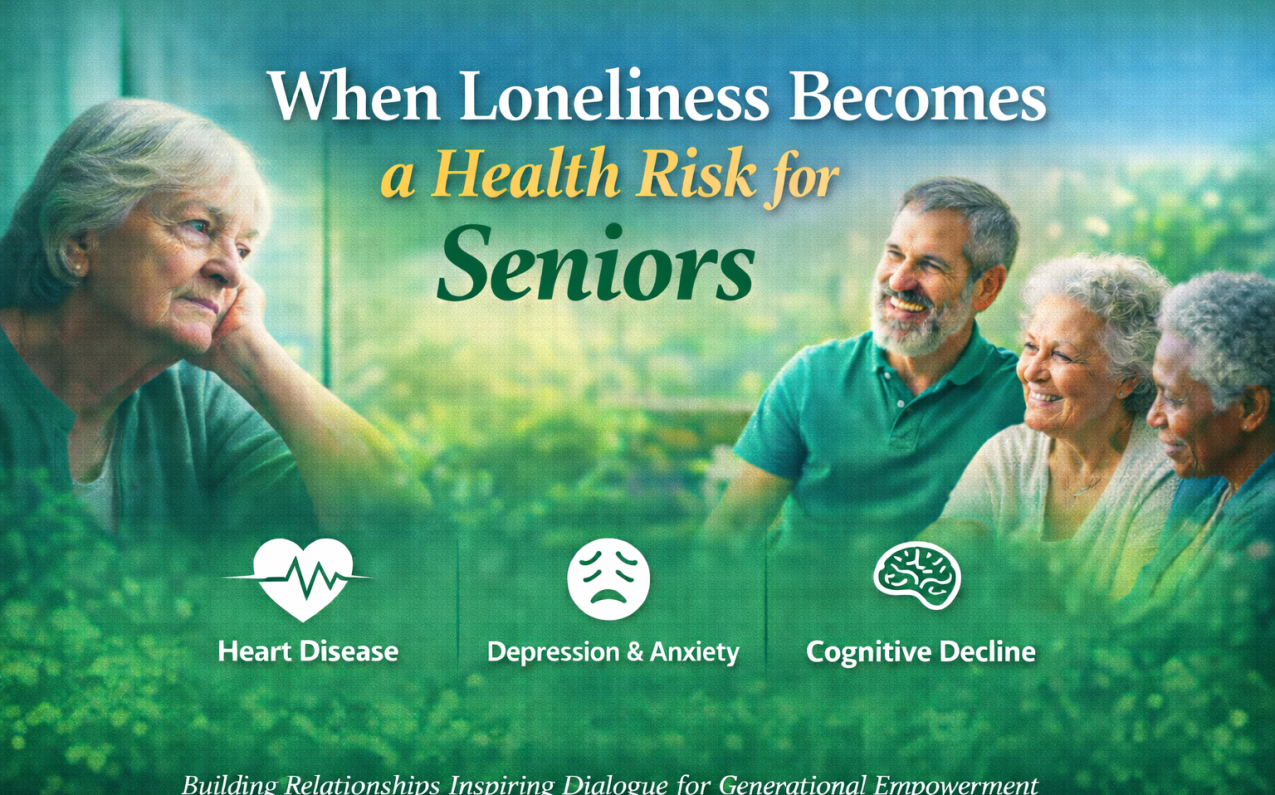
Human beings are wired for connection. From our earliest days, relationships help us grow, heal, and make sense of the world. Yet for millions of older adults, aging quietly strips away those connections – sometimes slowly, sometimes all at once. When friendships fade, mobility declines, loved ones pass on, or daily routines disappear, loneliness can take root. And when loneliness lingers, it stops being just an emotional burden. It becomes a serious health risk.
At BRIDGE Nevada, we believe aging should never mean being forgotten. Seniors deserve dignity, belonging, and meaningful relationships – not isolation. Understanding how loneliness affects older adults is a critical step toward creating healthier, more connected communities.
Loneliness and Social Isolation: Similar, But Not the Same
Loneliness and social isolation are often used interchangeably, but they are not identical – and that distinction matters.
Social isolation refers to an objective lack of social contact. An older adult may live alone, have limited interactions, or rarely leave their home. Loneliness, on the other hand, is subjective. It is the painful feeling of being unseen, unheard, or disconnected – even when other people are physically present.
An older adult can live alone and feel fulfilled, while another may be surrounded by family yet feel deeply lonely. Research supported by the National Institute on Aging highlights that both loneliness and social isolation independently affect health outcomes, sometimes in different ways. What connects them is their impact on well-being when left unaddressed.
For BRIDGE Nevada, this distinction reinforces an important truth: real connection is not about proximity – it’s about purpose, belonging, and meaningful engagement.
How Common Is Loneliness Among Seniors?
Loneliness among seniors is far more widespread than many people realize. In the United States, nearly 28 percent of adults aged 65 and older live alone. That translates to over 13 million people. While not all are lonely, a significant number experience persistent feelings of isolation.
Certain life events dramatically increase the risk, including:
- The loss of a spouse or long-term partner
- Retirement and the sudden loss of daily structure
- Reduced mobility or chronic illness
- Loss of driving privileges or access to transportation
- Children or family members living far away
For seniors experiencing these changes, loneliness often creeps in quietly. Over time, it can reshape daily life, motivation, and even physical health.
When Loneliness Turns Into a Health Crisis
Loneliness is not just emotionally painful – it is physiologically harmful. Decades of research have linked chronic loneliness and social isolation to serious health conditions, including:
- High blood pressure and heart disease
- Weakened immune response
- Depression and anxiety
- Cognitive decline and memory loss
- Increased risk of Alzheimer’s disease
- Higher rates of hospitalization
- Premature death
Some researchers compare the health impact of chronic loneliness to smoking or obesity. It accelerates wear and tear on the body, placing older adults at greater risk of illness and reduced quality of life.
This is why BRIDGE Nevada treats social connection as a health issue – not just a social one.
The Biology of Loneliness: What Happens Inside the Body
Loneliness doesn’t just affect the mind; it alters how the body functions. Research led by scientists like Dr. Steve Cole at UCLA has shown that chronic loneliness activates a biological stress response. When someone feels persistently disconnected, their body shifts into a state of perceived threat.
This response can:
- Increase inflammation throughout the body
- Weaken immune cells’ ability to fight viruses
- Accelerate plaque buildup in arteries
- Promote neurological changes linked to dementia
In simple terms, loneliness primes the body for illness. Dr. Cole describes loneliness as a “fertilizer” for disease – creating conditions where health problems can grow more easily.
The encouraging news? These effects are not irreversible. Purpose, connection, and community can significantly reduce biological stress responses, even later in life.
Loneliness, Memory Loss, and Cognitive Decline
One of the most concerning consequences of loneliness in seniors is its connection to cognitive decline. Studies consistently show that socially isolated older adults experience faster memory loss and a higher risk of developing Alzheimer’s disease and related dementias.
Meaningful interaction stimulates the brain. Conversations, shared activities, storytelling, and mentorship help keep neural pathways active. When seniors lose regular engagement, the brain receives fewer opportunities to stay sharp.
This is why BRIDGE Nevada intentionally creates intergenerational and community-based programs. Bringing seniors into meaningful roles, especially those that allow them to share wisdom and life experience, supports cognitive health while restoring a sense of purpose.
Living Alone With Cognitive Impairment: A Hidden Crisis
A growing number of older adults live alone while managing cognitive impairment. This group is among the most vulnerable and least visible.
Research shows that these seniors often face:
- Fear of crime or unsafe neighborhoods
- Limited access to affordable, trained home care
- Loss of transportation without alternatives
- Social withdrawal due to stigma around memory loss
- Anxiety about being forced into institutional care
Many want to remain engaged in their communities but face systemic barriers that make participation difficult or unsafe.
At BRIDGE Nevada, we recognize that addressing loneliness requires more than encouragement – it requires advocacy. Seniors need supportive environments, accessible services, and policies that prioritize connection, not confinement.
Why Purpose and Community Matter More Than Ever
One of the most powerful antidotes to loneliness is purpose. Seniors who feel useful, valued, and connected to something larger than themselves consistently report better mental and physical health.
Volunteering, mentoring, caregiving, storytelling, and intergenerational engagement all provide a sense of mission. Research shows that seniors who help others often experience:
- Lower levels of depression
- Stronger immune function
- Increased life satisfaction
- Reduced feelings of loneliness
This belief is central to BRIDGE Nevada’s mission. We don’t see seniors as recipients of care alone – we see them as essential contributors to community life.
Addressing Loneliness Requires Structural Change
Loneliness is not always the result of personal choices. Often, it is shaped by larger structural factors such as housing design, transportation systems, healthcare access, and social policy.
True solutions must go beyond encouraging seniors to “be more social.” They must include:
- Community-based programs that are accessible and inclusive
- Affordable transportation options
- Safe public spaces for gathering
- Trained caregivers who understand cognitive and emotional needs
- Policies that support aging in place with dignity
BRIDGE Nevada is committed to building bridges not just between people, but between systems – ensuring no senior falls through the cracks.
How We Can All Help Reduce Senior Loneliness
Loneliness is a collective challenge, and addressing it requires collective action. Each of us has a role to play:
- Check in regularly with older neighbors or relatives
- Support organizations that foster community connection
- Advocate for age-friendly policies and programs
- Encourage intergenerational engagement
- Volunteer time, skills, or resources
Small acts of connection can have life-changing effects.
Building a Future Where Seniors Are Seen, Heard, and Valued
Loneliness should never be accepted as a normal part of aging. Seniors deserve more than survival – they deserve belonging, health, and joy.
At BRIDGE Nevada, we are committed to building relationships that inspire dialogue, restore dignity, and create generational empowerment. When we invest in connection, we don’t just add years to life – we add life to years.
Because when loneliness becomes a health risk, community becomes the cure.