

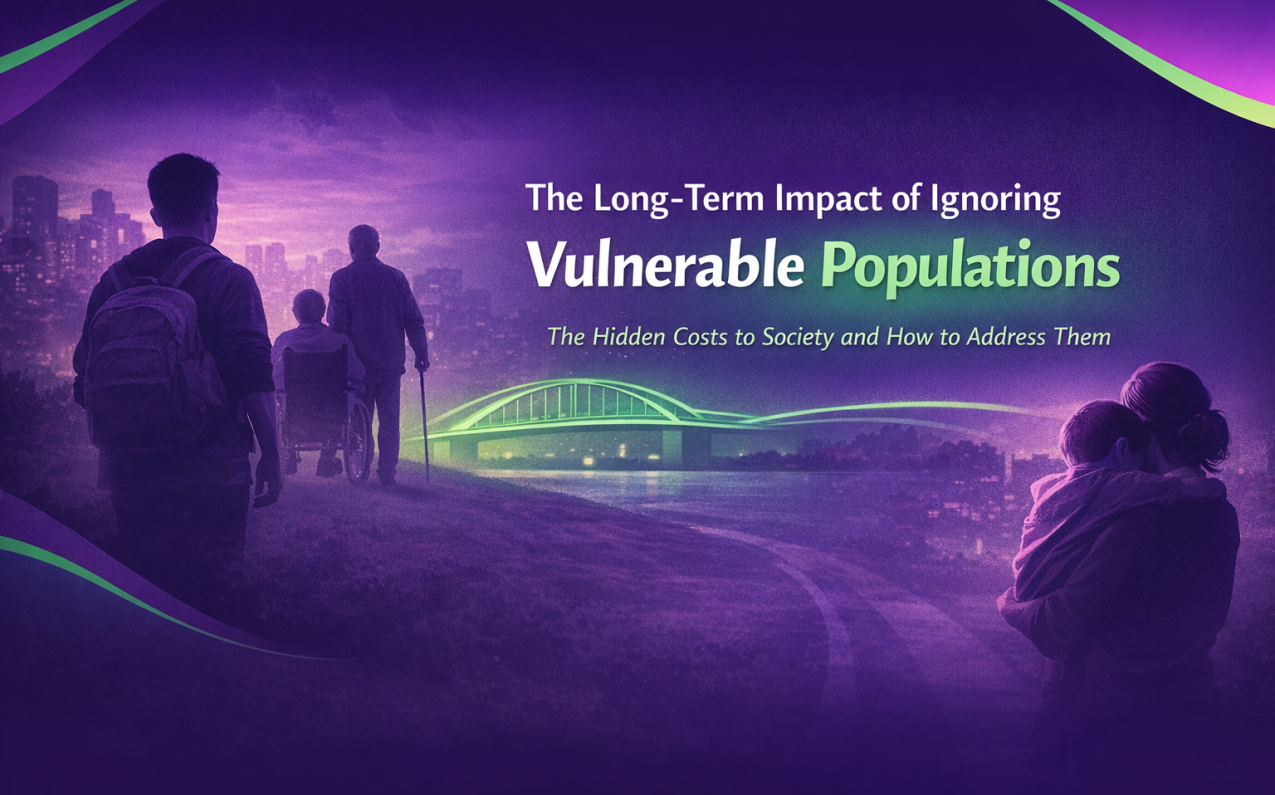
In every thriving society, there is a quiet but powerful truth: how we treat our most vulnerable defines not only our values, but our future. When populations such as seniors, foster youth aging out of care, low-income families, and individuals with disabilities are overlooked, the consequences do not remain isolated – they spread, deepen, and compound over time.
At BRIDGE Nevada, we believe that true community strength is built by lifting those at the margins. Ignoring vulnerable populations doesn’t just harm individuals – it weakens entire systems, erodes trust, and creates long-term societal instability. Understanding these impacts is not just important – it is urgent.
Entrenchment of Poverty and Economic Inequality
One of the most immediate and enduring consequences of neglecting vulnerable populations is the deepening of poverty cycles. When individuals lack access to stable housing, education, healthcare, and employment opportunities, they are often forced into survival mode rather than growth.
Cycles of Disadvantage That Repeat Across Generations
For foster youth aging out of care, the absence of structured support can mean entering adulthood without financial literacy, job readiness, or a safety net. A young adult without guidance may struggle to secure stable housing or employment, increasing the likelihood of homelessness or underemployment.
Similarly, seniors living on fixed incomes often face rising healthcare costs without adequate support. This can lead to difficult trade-offs – choosing between medication, food, or utilities.
Over time, these challenges don’t disappear. They multiply.
Children raised in economically unstable households often face:
- Interrupted education
- Limited access to technology
- Reduced exposure to career opportunities
These factors significantly reduce economic mobility, creating a cycle that becomes harder to break with each generation.
The Hidden Cost to Society
When vulnerable populations are ignored, communities pay the price in the long run:
- Increased reliance on public assistance programs
- Higher unemployment rates
- Reduced workforce productivity
Investing in people early is always more cost-effective than responding to crises later. At BRIDGE Nevada, we focus on proactive, not reactive support, helping individuals build sustainable independence rather than temporary survival.
Lasting Health Disparities and Systemic Strain
Health is one of the clearest areas where inequality becomes visible – and dangerous. When vulnerable groups are excluded from accessible, quality healthcare, the consequences can be severe and long-lasting.
Higher Morbidity and Reduced Life Expectancy
Seniors experiencing social isolation often face increased risks of:
- Heart disease
- Cognitive decline
- Depression and anxiety
For underserved populations, untreated chronic conditions such as diabetes or hypertension can escalate into life-threatening complications simply due to lack of access or delayed care.
Foster youth, particularly those aging out of the system, often carry unresolved trauma. Without access to mental health services, this can manifest as:
- Anxiety disorders
- PTSD
- Substance dependence
These are not isolated issues – they are systemic outcomes of neglect.
The Burden on Healthcare Systems
When early intervention is absent, healthcare systems are forced to respond to advanced, complex conditions that require more intensive and expensive care.
This creates:
- Overburdened emergency services
- Increased healthcare spending
- Reduced capacity to serve broader populations
At BRIDGE Nevada, we understand that wellness goes beyond physical health. Our approach integrates emotional support, community connection, and access to resources – because prevention is always more powerful than treatment.
Erosion of Social Cohesion and Trust
A society that consistently overlooks certain groups begins to fracture – not always visibly at first, but inevitably over time.
Mistrust in Institutions
When people feel abandoned by systems designed to protect them, trust erodes. This mistrust can lead to:
- Lower participation in public programs
- Resistance to health initiatives
- Disengagement from civic processes
For example, communities that have historically lacked access to equitable services may be less likely to trust future interventions, even when they are beneficial.
The Silent Epidemic of Loneliness
Among seniors, social isolation has become a growing crisis. It is not just an emotional issue – it is a public health concern.
Loneliness has been linked to:
- Increased risk of dementia
- Higher mortality rates
- Reduced overall quality of life
Similarly, foster youth aging out of care often report a profound lack of belonging. Without a support network, even simple life challenges can feel overwhelming.
At BRIDGE Nevada, we prioritize connection as a core solution. By fostering relationships between generations and communities, we help rebuild the social fabric that neglect has weakened.
Reduced Societal Resilience and Future Vulnerability
When vulnerable populations are ignored, society becomes less equipped to handle future challenges – whether economic, environmental, or social.
Amplified Impact During Crises
Natural disasters, economic downturns, and public health emergencies disproportionately affect those who are already at a disadvantage.
Without:
- Stable housing
- Financial reserves
- Access to information
these individuals face greater risks and slower recovery times.
This creates a ripple effect:
- Increased demand on emergency services
- Slower economic recovery
- Greater inequality post-crisis
The Inequality Paradox
Focusing only on the “general population” often widens the gap between the privileged and the underserved. Over time, this imbalance leads to:
- Social instability
- Increased crime rates
- Reduced national productivity
A resilient society is not one where most people are doing well – it is one where no one is left behind.
Key Mitigation Strategies: Building a More Inclusive Future
Addressing these long-term impacts requires intentional, strategic action. It is not enough to acknowledge the problem – we must actively design solutions that are inclusive, sustainable, and community-driven.
Targeted Social Protection
One-size-fits-all solutions rarely work for complex challenges. Vulnerable populations require tailored support systems that address their specific needs.
This includes:
- Transitional housing for foster youth
- Accessible healthcare services for seniors
- Financial literacy and employment programs
At BRIDGE Nevada, our mission is rooted in personalized, human-centered care – because every individual’s journey is unique.
Closing the Digital Divide
In today’s world, access to technology is no longer optional – it is essential.
Without digital access, individuals are excluded from:
- Job opportunities
- Telehealth services
- Educational resources
Bridging this gap means providing not just devices, but also the training and support needed to use them effectively.
Community-Based Engagement
The most effective solutions come from within the community itself.
By involving vulnerable populations in decision-making processes, we ensure that:
- Programs are relevant
- Solutions are practical
- Outcomes are sustainable
This is a core principle at BRIDGE Nevada – we don’t just serve communities, we partner with them.
Data-Driven Decision Making
Understanding the unique challenges faced by different groups requires accurate, detailed data.
Disaggregated data allows policymakers and organizations to:
- Identify gaps in services
- Measure impact effectively
- Adjust strategies in real time
Without this level of insight, even well-intentioned efforts can miss the mark.
Why This Matters Now More Than Ever
The cost of ignoring vulnerable populations is not just measured in statistics – it is seen in real lives, real struggles, and missed potential.
A young adult leaving foster care without support is not just an individual challenge – it is a community responsibility.
A senior living in isolation is not just a personal hardship – it is a societal failure.
At BRIDGE Nevada, we stand for something different.
We stand for:
- Connection over isolation
- Opportunity over limitation
- Support over neglect
Because when we invest in people, we invest in the future.
A Call to Action: Be Part of the Solution
Creating lasting change requires collective effort. Whether you are a policymaker, donor, volunteer, or community member, your role matters.
You can:
- Support organizations working directly with vulnerable populations
- Advocate for inclusive policies
- Offer mentorship or resources
- Raise awareness within your network
The truth is simple but powerful:
A stronger society begins with how we treat those who need us most.
Let’s build that future – together.