

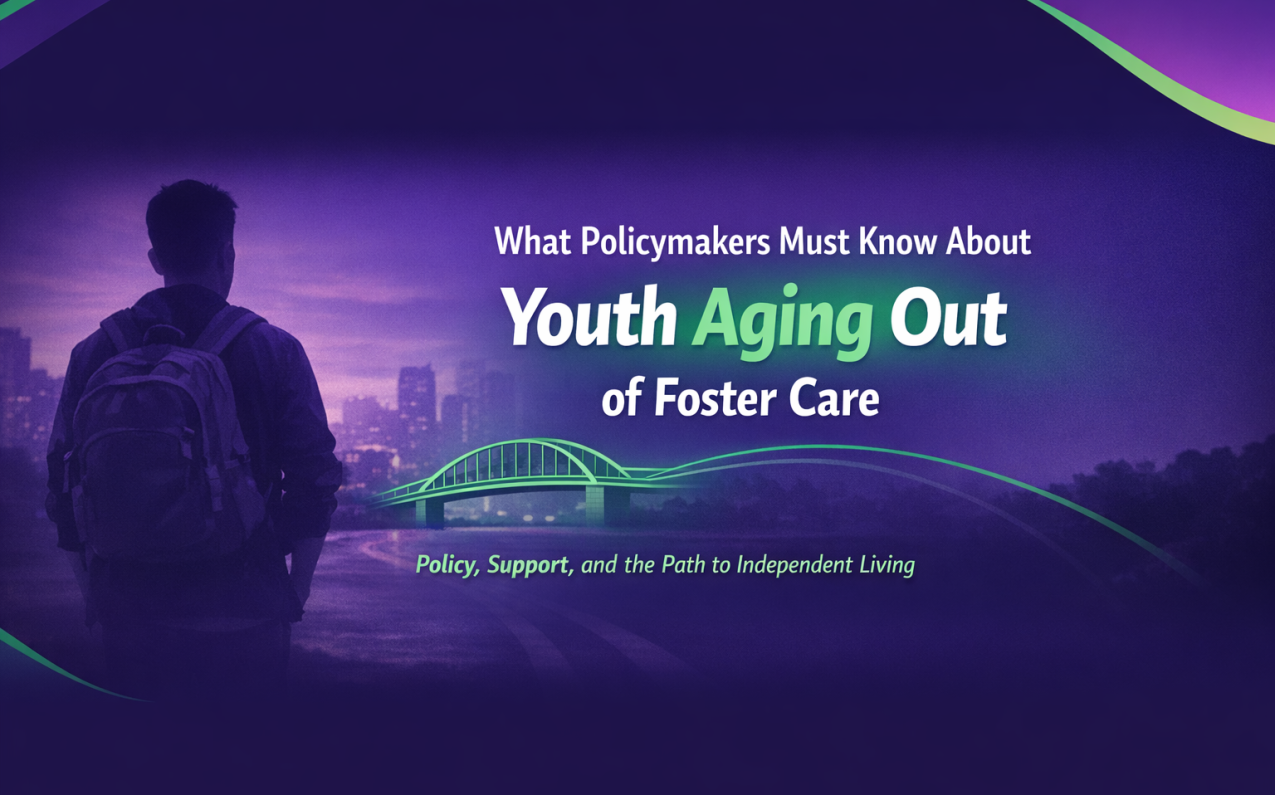
There is a moment – quiet, often unnoticed – when a young person in foster care turns 18 or 21 and the system simply… lets go.
No ceremony. No safety net. No guarantee of what comes next.
For most young adults, the transition into independence is gradual. It’s supported by family, guided by advice, softened by the knowledge that if something goes wrong, there’s always somewhere to return to. But for thousands of youth aging out of foster care each year, independence is not a step forward – it’s a sudden drop into uncertainty.
If policymakers are serious about equity, opportunity, and long-term societal well-being, then understanding and addressing the realities faced by these young adults is not optional – it is essential.
At BRIDGE Nevada, we believe that no young person should have to navigate adulthood alone. And the truth is, with the right policies and community-driven support systems, they don’t have to.
The Reality of Aging Out: A System That Ends Too Soon
Every year, over 20,000 young people in the United States age out of the foster care system without a permanent family. While policies exist to support them, many still leave care with little more than personal belongings and a list of expectations they were never fully prepared to meet.
They are expected to:
- Find and maintain stable housing
- Secure employment
- Manage finances
- Access healthcare
- Build support networks
All at once.
For many, this transition happens without guidance, mentorship, or emotional support. It’s not just a policy gap – it’s a human gap.
Why Traditional Support Systems Fall Short
Policymakers have long recognized the challenges faced by foster youth and have introduced programs such as housing assistance, education vouchers, and healthcare access. While these efforts are valuable, they often fall short for one critical reason:
They are fragmented.
A young person may receive housing support but lack job readiness skills. Another may have access to education funding but no stable place to live. Some receive services but lack the emotional resilience or mentorship needed to navigate real-world challenges.
At BRIDGE Nevada, we see this disconnect clearly. True support is not about isolated services – it’s about a holistic, coordinated system that meets young people where they are and walks with them as they grow.
The Emotional and Psychological Toll
One of the most overlooked aspects of aging out of foster care is the emotional burden.
Many of these young adults have experienced:
- Multiple placements
- Loss of relationships
- Trauma and instability
- Interrupted education
When they age out, these experiences don’t disappear – they follow them into adulthood.
Feelings of fear, anxiety, loneliness, and self-doubt are common. Without consistent support, these emotional challenges can evolve into long-term mental health struggles, making it even harder to achieve stability.
Policymakers must understand:
This is not just a housing issue or an employment issue. It is a human development issue.
The High Cost of Inaction
Failing to adequately support youth aging out of foster care doesn’t just affect individuals – it impacts entire communities.
Research consistently shows that without proper support, these young adults are at significantly higher risk of:
- Homelessness
- Unemployment
- Incarceration
- Human trafficking
- Chronic health issues
The financial cost to society is staggering. Public systems – including healthcare, criminal justice, and social services – bear the long-term burden of short-term policy gaps.
But beyond the numbers is a deeper cost: lost potential.
Every young person who falls through the cracks represents a future that could have been different – with the right support at the right time.
A New Approach: Investing in Independence, Not Just Survival
If current systems are not enough, what should policymakers do differently?
The answer lies in shifting the focus from short-term assistance to long-term empowerment.
1. Direct Financial Support Matters
Emerging research suggests that direct financial assistance – such as Fostering Independence Accounts – can significantly improve outcomes.
These accounts provide young adults with:
- Funds for housing deposits
- Transportation support
- Education expenses
- Daily living needs
More importantly, they offer something deeper: dignity and choice.
When paired with financial literacy education, this approach empowers young people to make decisions, learn from experience, and build confidence in managing their lives.
2. Extend Support Beyond Age Limits
Adulthood doesn’t begin overnight – and support shouldn’t end abruptly.
Policies should prioritize:
- Extended foster care options
- Continued mentorship programs
- Long-term case management
At BRIDGE Nevada, we believe that consistent relationships – not temporary interventions – are what truly change lives.
3. Integrate Mental Health and Trauma-Informed Care
Healing is not optional – it is foundational.
Policymakers must ensure that mental health services are:
- Accessible
- Affordable
- Tailored to the unique experiences of foster youth
Trauma-informed care should be embedded into every support system, from housing programs to workforce development initiatives.
4. Strengthen Community-Based Support Systems
Government policies alone cannot solve this challenge.
Community organizations like BRIDGE Nevada play a critical role in:
- Providing mentorship
- Creating safe spaces
- Building meaningful relationships
- Bridging gaps between services
When policymakers invest in community-driven solutions, they amplify impact and ensure support reaches those who need it most.
5. Create Opportunities, Not Just Safety Nets
Young people aging out of foster care don’t just need help – they need opportunity.
This includes:
- Job training and career pathways
- Access to higher education
- Internship and employment programs
- Entrepreneurial support
Empowerment comes from possibility. And possibility comes from access.
What Makes BRIDGE Nevada Different
At BRIDGE Nevada, we don’t believe in one-size-fits-all solutions.
We are committed to:
- Bridging the gap between vulnerability and opportunity
- Supporting both youth aging out of foster care and seniors facing isolation
- Creating intergenerational connections that foster healing, growth, and belonging
- Delivering holistic, human-centered support systems
Our approach is simple but powerful:
We don’t just provide services – we build relationships, restore dignity, and create pathways forward.
Policy Is Personal: A Call to Action
Behind every statistic is a story.
A young person trying to figure out where they will sleep next week.
A recent graduate unsure how to pay for their next meal.
An individual carrying years of trauma while trying to build a future from scratch.
Policymakers have the power to change these stories.
By rethinking how support is structured, investing in long-term solutions, and partnering with organizations like BRIDGE Nevada, we can create a system that doesn’t just release young people into the world – but prepares them to thrive in it.
Conclusion
The transition out of foster care should not be a breaking point – it should be a bridge.
A bridge to stability.
A bridge to opportunity.
A bridge to belonging.
At BRIDGE Nevada, that’s exactly what we are building.
And with the right policies, partnerships, and commitment, it’s a future that is entirely within reach.