



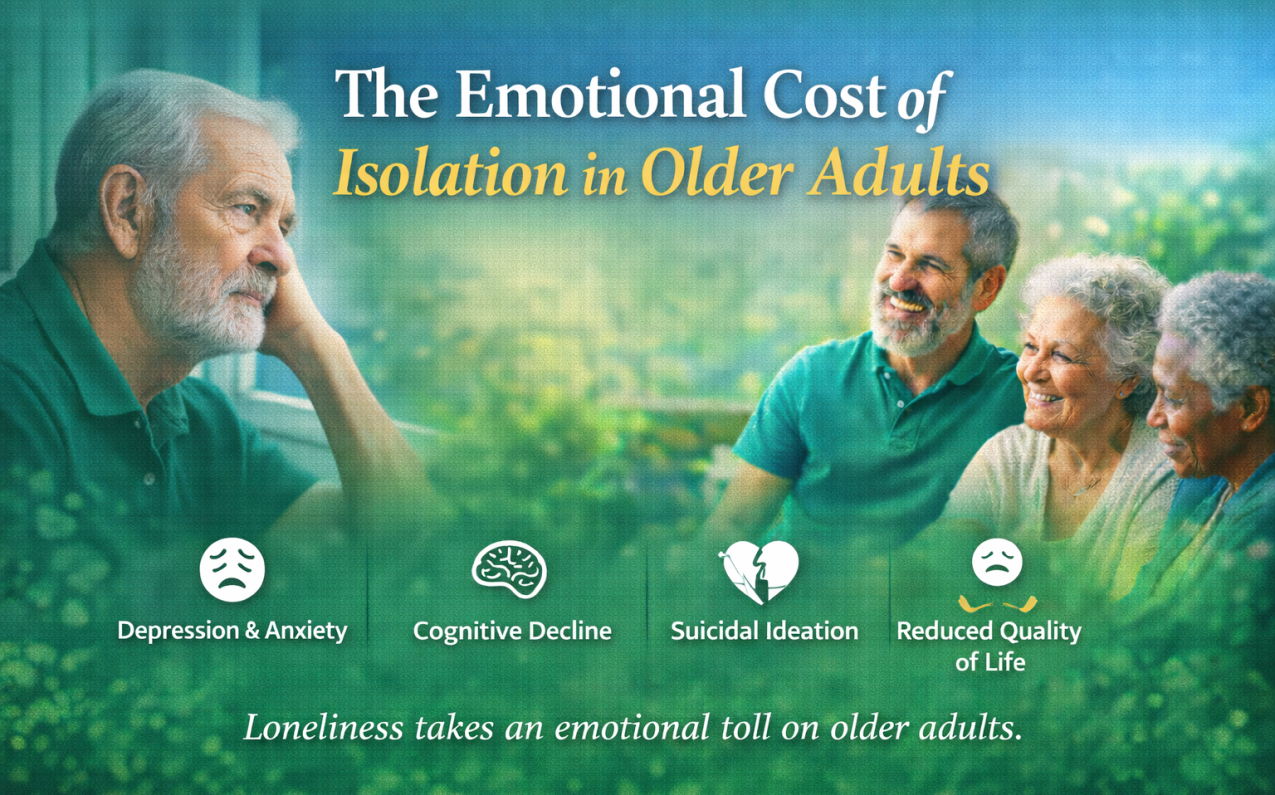
There is a quiet crisis unfolding in our communities – one that does not always make headlines, yet deeply affects millions of families across the United States. It happens behind closed doors, in empty living rooms, in silent kitchens, and in neighborhoods where once-vibrant connections have slowly faded.
It is the emotional cost of isolation in older adults.
At BRIDGE Nevada, where we are committed to Building Relationships Inspiring Dialogue for Generational Empowerment, we see firsthand how social isolation impacts seniors – not just physically, but emotionally and spiritually. And we also see something equally powerful: how connection can restore dignity, purpose, and hope.
Understanding the emotional toll of isolation is the first step toward building stronger, healthier communities for our seniors.
Understanding Social Isolation in Older Adults
Human beings are inherently social. From infancy through late adulthood, connection shapes how we think, feel, and survive. Yet for many older adults, social networks shrink over time due to retirement, loss of loved ones, mobility limitations, or relocation.
According to national research, approximately one in four older adults experiences social isolation, and the consequences are far more serious than many people realize.
It is important to distinguish between being alone and feeling lonely. Some seniors live alone and feel content. Others may be surrounded by people and still feel profoundly disconnected. Social isolation refers to the objective lack of social contact, while loneliness is the subjective emotional distress that results from perceived isolation.
Both can have devastating emotional effects.
The Emotional and Mental Health Impacts of Isolation
Depression and Anxiety in Seniors
Chronic loneliness is closely linked to depression and anxiety. When meaningful interactions diminish, many older adults begin to experience:
- Persistent sadness
- Feelings of emptiness
- Heightened worry or fear
- Irritability
- Loss of interest in activities once enjoyed
Over time, these symptoms can develop into major depressive disorders. The absence of regular conversation, physical presence, and emotional reassurance gradually erodes emotional stability.
For many seniors, isolation amplifies negative self-perceptions. Thoughts like “I am no longer useful” or “No one needs me anymore” begin to take root. Without intervention, these beliefs can deepen into clinical depression.
Suicidal Ideation and the Burden Narrative
One of the most concerning emotional costs of isolation in older adults is the increased risk of suicidal thoughts.
Research shows that when social isolation is combined with the belief that one is a burden to family or society, risk significantly increases. The loss of a spouse, lifelong friends, or community roles can intensify this perception.
Older adults may avoid expressing their emotional distress because they do not want to “cause trouble.” This silence can make isolation even more dangerous.
Community-based senior support programs, including intergenerational initiatives like those championed by BRIDGE Nevada, play a crucial role in restoring a sense of belonging and significance.
Cognitive Decline and Dementia Risk
Social engagement stimulates the brain. Conversation, shared laughter, storytelling, problem-solving, and emotional connection all activate neural pathways.
Studies indicate that social isolation is associated with a 29% increase in risk of incident dementia and accelerated cognitive decline. When social interaction decreases, cognitive stimulation also declines.
Isolation may also increase stress hormones, which contribute to inflammation and long-term damage to brain health.
Seniors who regularly participate in meaningful community engagement – mentorship, volunteering, peer discussions, and intergenerational dialogue – often show stronger cognitive resilience.
This is one reason why connecting seniors with youth aging out of foster care is not just socially beneficial – it is neurologically protective.
Reduced Quality of Life and Loss of Purpose
Perhaps the most profound emotional consequence of isolation is the loss of purpose.
After retirement, many seniors lose daily structure and identity tied to career or caregiving roles. If meaningful activities are not replaced, a void forms. Over time, this can result in:
- Feelings of worthlessness
- Decreased resilience to stress
- Emotional withdrawal
- Lack of motivation
Purpose is a powerful protective factor. Seniors who feel needed – who mentor, guide, teach, or share their stories – often experience renewed vitality.
At BRIDGE Nevada, we believe that older adults are not simply recipients of care; they are carriers of wisdom. By creating intentional spaces where seniors mentor and support youth transitioning out of foster care, we help restore mutual purpose and belonging.
Behavioral Changes Linked to Isolation
Emotional distress often manifests in behavior. Isolated seniors may experience:
- Poor sleep patterns
- Decreased physical activity
- Unhealthy eating habits
- Increased alcohol consumption
- Withdrawal from medical appointments
Over time, these behaviors contribute to worsening physical health, further compounding emotional strain.
Isolation becomes a cycle: poor health increases isolation, and isolation worsens health.
Risk Factors for Social Isolation in Older Adults
Understanding the causes of isolation helps communities intervene effectively.
Life Transitions
Major life changes such as:
- Retirement
- Death of a spouse
- Loss of close friends
- Adult children relocating
can significantly reduce daily interaction and emotional support.
Physical Limitations
Declining mobility, hearing loss, or chronic illness can make it difficult for seniors to attend social gatherings or maintain relationships. Without accessible transportation or supportive services, isolation deepens.
Environmental and Economic Factors
Living alone, low income, limited transportation options, and unsafe neighborhoods also contribute to isolation. Structural barriers often prevent seniors from accessing community activities.
The National Institute on Aging reports that long-term social isolation contributes to a 14% to 32% increase in mortality rates, comparable to major physical health risk factors.
Isolation is not merely emotional – it is life-threatening.
The Broader Health Consequences of Chronic Isolation
Isolation affects more than mood. Research links chronic loneliness to:
- Increased risk of stroke (32% higher risk)
- Cardiovascular disease
- Weakened immune function
- Chronic inflammation
- Higher overall mortality rates
Stress triggered by loneliness activates biological defense mechanisms. When prolonged, this response contributes to long-term wear and tear on the body.
In simple terms, loneliness is not just emotional – it is biological.
Why Community-Based Solutions Matter
The solution to senior isolation cannot rely solely on medical treatment. It requires social innovation.
This is where organizations like BRIDGE Nevada stand apart.
Rather than viewing seniors only through a healthcare lens, we approach well-being through connection, empowerment, and intergenerational dialogue.
Our model recognizes that:
- Seniors need meaningful relationships, not just services.
- Youth aging out of foster care need stable, caring adult connections.
- Community integration strengthens both groups simultaneously.
By connecting older adults with youth transitioning from foster care, we create:
- Mutual mentorship opportunities
- Emotional healing spaces
- Shared purpose
- Reduced loneliness
- Increased resilience
This intergenerational approach addresses emotional isolation at its root.
Practical Ways to Reduce Isolation in Older Adults
Communities and families can take actionable steps:
Encourage Meaningful Engagement
Not just activities – but relationships. Encourage seniors to participate in mentorship, volunteer work, or community storytelling programs.
Prioritize Transportation Access
Ensure reliable transportation options so older adults can attend community events and appointments.
Support Mental Health Conversations
Normalize discussions around depression and loneliness in seniors. Emotional health is not a weakness – it is a health priority.
Leverage Intergenerational Programs
Programs that connect seniors with youth – especially vulnerable youth – provide reciprocal emotional benefits.
Advocate for Policy Support
Support local and national initiatives that address social determinants of health for older adults.
A Collective Responsibility
Loneliness does not have to define aging.
The late Dr. John Cacioppo’s groundbreaking research showed that loneliness triggers biological processes that increase health risks. But he also emphasized something powerful: loneliness is malleable.
Connection can interrupt the cycle.
At BRIDGE Nevada, our mission – Building Relationships Inspiring Dialogue for Generational Empowerment – is rooted in this belief. We see connection not as a luxury, but as a necessity for healthy aging.
When seniors feel valued, needed, and heard, their emotional health strengthens. When youth aging out of foster care gain stable mentorship from older adults, their futures expand.
The result is not just reduced loneliness – it is community transformation.
The Path Forward
The emotional cost of isolation in older adults is real. It increases depression, anxiety, cognitive decline, and mortality risk. It diminishes quality of life and weakens community bonds.
But isolation is not inevitable.
Through intentional connection, compassionate programming, and intergenerational engagement, we can build environments where seniors thrive rather than withdraw.
If you are in Nevada and want to support senior well-being, youth mentorship, and intergenerational empowerment, learn more about how BRIDGE Nevada is creating lasting impact.
Because no one, young or old, should navigate life alone.