

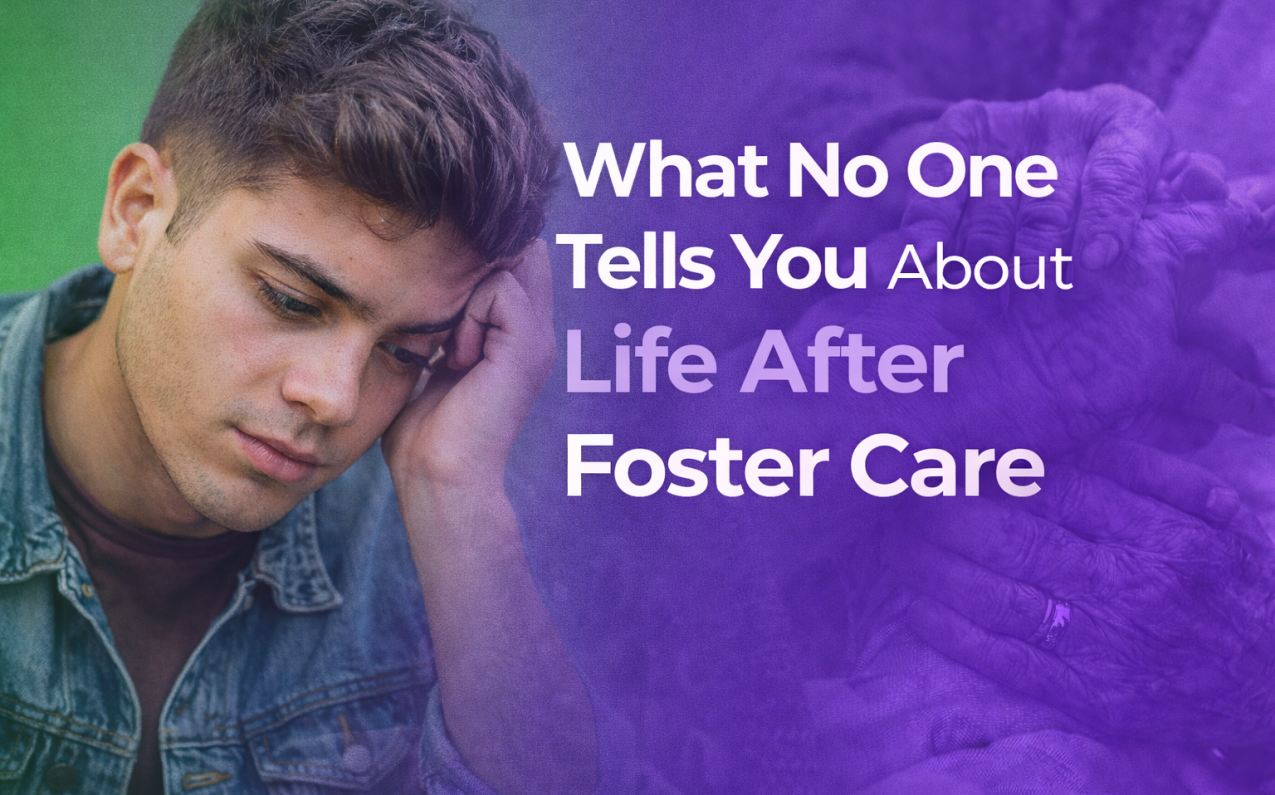
For many young people in foster care, survival becomes a skill learned early. You learn how to adapt quickly, how to read a room, how to accept circumstances you didn’t choose, and how to keep moving forward even when answers are missing. What no one prepares you for, though, is what happens after foster care ends – when the system closes its doors, and life quietly hands you responsibilities without instructions.
Aging out of foster care is often described as a milestone, a moment of independence. But the truth is far more complex. Life after foster care doesn’t suddenly become easier. In many ways, it becomes lonelier, heavier, and more uncertain. And yet, within that uncertainty lives resilience, possibility, and the chance to build new connections that can change everything.
At BRIDGE Nevada, we believe that no one should have to navigate that transition alone.
The Myth of “Aging Out Means You’re Free”
One of the biggest misconceptions about foster care is that once you age out, the hardest part is over. Turning 18 or 21, depending on the state, comes with an unspoken expectation: You should be fine now.
But what does “fine” even mean?
For most young adults, adulthood begins with a safety net – family guidance, emotional support, a couch to crash on, someone to call when life falls apart. For youth aging out of foster care, adulthood often begins with silence. No caseworker check-ins. No guaranteed housing. No one asking if you ate today.
What no one tells you is that aging out doesn’t erase the past. It doesn’t magically resolve unanswered questions about identity, family, or belonging. In fact, it often brings those questions to the surface with more force than ever.
The Emotional Weight No One Warns You About
Life after foster care carries an emotional weight that’s difficult to put into words. There’s grief for the family you didn’t have, confusion about where you come from, and sometimes a deep ache for answers that may never arrive.
Many former foster youth carry missing pieces of their story – absent parents, unknown relatives, untold histories. You may think you’ve accepted those gaps, only for something unexpected to reopen them. A message. A name. A photograph. A truth arriving far too late.
These moments can feel overwhelming, not because you’re weak, but because foster care teaches you to compartmentalize pain just to survive. When life slows down after aging out, those emotions finally have space to surface.
And when they do, there’s often no one there to help you process them.
Independence Without Support Is Not Freedom
True independence isn’t about being alone – it’s about having support while you learn to stand on your own.
What no one tells you about life after foster care is how steep the learning curve can be. Managing rent. Finding stable employment. Navigating healthcare. Building credit. Maintaining relationships. Processing trauma. All at once.
Without guidance, mistakes feel catastrophic. One missed paycheck can mean homelessness. One bad decision can feel like confirmation of every negative label ever placed on you.
At BRIDGE Nevada, we recognize that independence must be supported, not forced. That’s why we focus on building relationships that provide consistency, mentorship, and encouragement long after foster care ends.
Why Connection Matters More Than Ever After Foster Care
One of the most overlooked needs of youth aging out of foster care is connection.
Connection to people.
Connection to history.
Connection to purpose.
Connection to community.
Without it, isolation can quietly take over. Many former foster youth report feeling invisible – no longer “in the system,” but not fully integrated into society either.
This is where intergenerational relationships become powerful.
Seniors bring lived wisdom, patience, and stability. Youth bring energy, resilience, and perspective. When these generations connect, something remarkable happens: loneliness decreases, confidence grows, and both sides rediscover a sense of purpose.
This is the heart of BRIDGE Nevada – Building Relationships Inspiring Dialogue for Generational Empowerment.
The Long Shadow Foster Care Can Cast
Foster care doesn’t end when paperwork does. It shows up later – in how you handle trust, how you respond to loss, how you see yourself when things go wrong.
Life after foster care often includes:
- Difficulty forming long-term relationships
- Fear of abandonment
- Hyper-independence
- Anxiety around stability
- A lingering sense of not belonging anywhere
These aren’t personal failures. They are understandable responses to instability and loss.
What no one tells you is that healing doesn’t happen in isolation – it happens in safe relationships.
Resilience Is Real – but It Shouldn’t Be the Only Plan
Yes, foster youth are resilient. That truth deserves recognition. But resilience should never be used as an excuse to withdraw support.
Surviving is not the same as thriving.
At BRIDGE Nevada, we believe resilience should be met with opportunity, mentorship, and community care. When youth aging out of foster care are supported – emotionally, socially, and practically – they don’t just survive adulthood, they build meaningful, stable lives.
And when seniors are invited into these relationships, they too experience renewed purpose, reduced loneliness, and a chance to leave a lasting legacy.
What Life After Foster Care Can Look Like – with the Right Support
When connection replaces isolation, life after foster care begins to change.
It looks like:
- Someone to call when life feels overwhelming
- A mentor who listens without judgment
- A community that sees potential instead of problems
- Guidance through adulthood, not just independence
- Healing across generations
This is why BRIDGE Nevada exists – to ensure that no one is left navigating life alone simply because the system decided their time was up.
Moving Forward Together
What no one tells you about life after foster care is that the unknown doesn’t disappear – but neither does hope.
The world will still surprise you. Some surprises will hurt. Others will heal. What matters most is not avoiding hardship, but having people beside you when it comes.
Foster care may shape a chapter of your life, but it does not define the ending.
With compassion, connection, integrity, and community, we can build bridges that carry young people and seniors toward dignity, belonging, and lasting empowerment.
At BRIDGE Nevada, we are committed to making sure that aging out never means being forgotten.